ESHG webinar series
There are amazing things happening in the world of genomics.
As an ESHG member having to wait a full 12 months for the next conference to come around where we showcase all of the exciting developments in our field must seem like a very long time.
Hence, we have developed a new ESHG webinar series where you will hear from distinguished speakers about their work. We aim to ensure that this is a diverse program covering all topics relevant to Human Genetics reflecting all the interests of our membership.
We hope you enjoy it and look forward to your feedback.
Mark Your Calendars for Our Monthly Webinars
We are excited to announce that our webinars will now take place on the last Wednesday of each month. These sessions are held via Zoom and are free to attend.
Sign up for our Webinar Newsletter to receive Updates and Reminders for upcoming Episodes.
Recordings on YouTube
We are recording the webinars and making them available in the ESHG Educational Library on YouTube.
Watch past Episodes now! To the ESHG YouTube Channel
S2 E1 - Wednesday, January 28, 2026 (14:00 CET)
Sarah Norris | The benefits, risks and challenges of sequencing the genome of newborns Sarah will present findings from an Australian government funded project (genomics4newborns) that is exploring the perspectives of local stakeholders regarding the use of genomics in newborn bloodspot screening, and the circumstances under which this might be acceptable. The project is using qualitative, quantitative and deliberative methods to explore and compare the views of parents, scientists, clinicians, policy-makers, the general public, and Indigenous Australians. The integrated findings will be used to inform the development of a set of nationally-agreed principles to guide future decisions regarding the use of genomics in Australian newborn screening programs. Link to the project: https://genomics4newborns.sydney.edu.au/ |
S2 E2 - Wednesday, February 25, 2026 (16:00 CET)
Newborn screening aims to avoid irreparable health damage by early diagnosis of (often genetic) conditions. It all started with phenylketonuria more than 50 years ago, but programs now cover 10-50 conditions. Many pilots of genomic newborn screening are ongoing, hoping to identify many more treatable conditions. This webinar will not just consist of one presentation, but it will briefly discuss some of the pros and cons. The first presentation will speak about the development of genomic newborn screening in England, followed by comments from the perspectives of patients and traditional newborn screening.
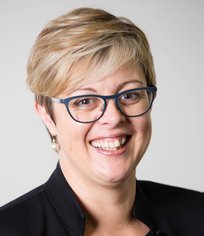
Amanda Pichini | The Generation Study: exploring the potential of newborn genome sequencing in a national public health system The Generation Study is exploring the feasibility, acceptability and utility of sequencing the genomes of 100,000 babies to screen for >200 rare conditions; as well as use of babies’ genomes over their lifetimes for other clinical uses, and alongside longitudinal health data collection for wider health research. Early results from over 20,000 of newborns demonstrate detectability of treatable conditions while minimizing false positives. This talk will focus on the engagement, governance frameworks, ethical considerations and co-design approaches that have enabled sustainable and scalable implementation, as well as challenges in generating evidence and maintaining ongoing public trust. |
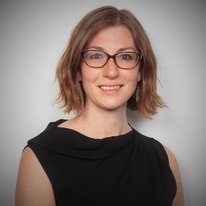
James R Bonham | Newborn Screening, much to explore, and also much to protect Newborn screening is widely recognised as one of the greatest public health advances of the 20th century, with more than 750 million babies tested since its introduction and exceptionally high public confidence reflected in uptake rates exceeding 99%. Despite this success, current screening programmes identify fewer than 100 conditions, while thousands of congenital genetic disorders with potential treatments exist. Genomic newborn screening offers promising opportunities to expand detection, but also raises challenges related to variant interpretation, uncertainty in asymptomatic individuals, and reduced sensitivity in some populations; combining genomic and biochemical approaches may help extend screening responsibly while preserving accuracy and public trust. |
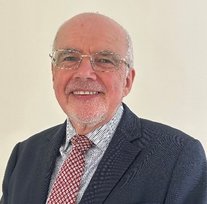
Gulcin Gumus | Shaping genetic newborn screening research through patient organisations This talk will focus on how patient organisations can drive genetic newborn screening research forward, and on the role of EURORDIS in ensuring that patient perspectives are meaningfully included in the discussions that shape gNBS research today and gNBS practices in the future. |
S2 E3 - Wednesday, March 25, 2026 (16:00 CET)
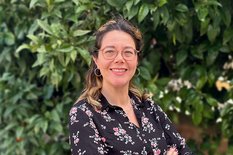
Lili Milani | Pharmacogenomic studies in the Estonian Biobank Long-read sequencing technologies are transforming our ability to detect and interpret complex genetic variation, with important implications for both research and clinical implementation. In this webinar, I will present results from large-scale long-read genome sequencing in the Estonian Biobank, a volunteer-based resource linking genomic data with extensive electronic health records for over 212,000 participants. Sequencing of 10,000 genomes using PacBio HiFi technology has revealed a substantial number of novel variants and provided improved resolution of structural variants and complex pharmacogenomic loci that are often missed by short-read approaches. The talk will highlight insights from the CYP2D6-CYP2D7 region, demonstrating how long-read data enable accurate phasing and interpretation of clinically relevant haplotypes. In addition, the webinar will discuss the return of genomic results to participants through the MyGenome portal, which provides personalised pharmacogenetic and disease risk information and has already been accessed by more than 110,000 individuals. |
S2 E4 - Wednesday, April 29, 2026 (16:00 CEST)
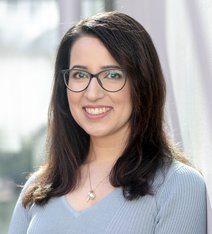
Alexandre Reymond | Variable expressivity and pleiotropy of the 16p11.2 recurrent CNVs Recurrent genomic rearrangements at 16p11.2 BP4-5 represent one of the most common causes of genomic disorders. Originally associated with increased risk for autism spectrum disorder, schizophrenia, developmental delay/intellectual disability, adiposity and altered head circumference, these CNVs have since been associated with a large array of phenotypic alterations with variable expressivity and penetrance. The encompassed genes act through both direct and indirect pleiotropy. |
S2 E5 - Wednesday, May 27, 2026 (16:00 CEST)
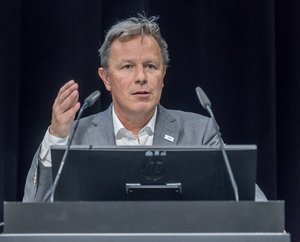
Industry Pathways in Genetics and Genomic Science
Jointly hosted by ASHG and ESHG, this 1-hour program provides an in depth look at how scientists build careers in the industry sector. Presenters will share how they apply their scientific background to the industry environment and offer advice to those considering this path.
During this interactive panel discussion, speakers will explore:
- Pathways into the private sector
- The range of scientific roles in industry, including research, translational science, clinical development, and data science
- Skills, experiences, and competencies that are most useful in their role
- Advice for trainees and early-career scientists preparing for industry careers
Following the panel, attendees will have the opportunity to ask questions and gain candid insights directly from industry scientists.
Registration is free, but mandatory through the ASHG website:
- follow this link: https://learning.ashg.org/products/industry-pathways-in-genetics-and-genomic-science
- click on Register
- click on Log in
- click on 'Need an Account?' and fill out your information
- After creating the account, you will automatically have the webinar in your Dashboard
S2 E6 - Wednesday, July 29, 2026 (16:00 CEST)
Karoline Kuchenbäcker | Ancestral diversity in genetics: From discovery to translation The expansion of ancestrally diverse genetic cohorts has altered the landscape of complex disease genetics. I will discuss how ancestral and global diversity shape genetic discoveries. Whilst there is widespread sharing of genetic architecture across ancestries, loci that display heterogeneity in causal genetic effects across populations can offer unique biological insights. As we advance towards global precision medicine, integrating genomic data with diverse environmental and social factors is crucial to account for population-specific contexts that can influence disease risk or treatment response. |

S2 E7 - Wednesday, September 30, 2026 (16:00 CEST)
ASHG-ESHG Joint Webinar: Careers in the Public Sector
Jointly hosted by ASHG and ESHG, this 1-hour program provides an in-depth look at how scientists build careers in the public sector. Presenters will share how they apply their scientific background to public sector roles and offer advice to those considering this path.
During this interactive panel discussion, speakers will explore:
- Pathways into the public sector
- The range of scientific roles in the public sector, including public health genomics, regulatory science, national screening programmes, and policy advising
- Skills, experiences, and competencies that are most useful in their role
- Advice for trainees and early-career scientists preparing for public sector careers
Following the panel, attendees will have the opportunity to ask questions and gain candid insights directly from scientists working in the public sector.
Speakers
Amna Khamis | Amna Khamis is Professor at the University of Lille, Visiting Researcher at Imperial College London, and an EFSD/Novo Nordisk Foundation Future Leader Fellow. She studied and trained in genetics in the United Kingdom before moving to France, where she continued her academic career within the French public research and university system. She currently leads the Epigenomics group within the METAB-OMICS laboratory at the University of Lille, France. Her research focuses on the genomics and epigenomics of diabetes, ageing and metabolic disease using computational approaches, and on translating molecular discoveries into improved disease prediction and prevention. |

Ayse Demirkan | Dr Ayse Demirkan is an academic at the University of Surrey, where she has been working since 2021. She began her academic journey studying Biological Oceanography in University of Istanbul, before moving into wet-lab genetics and later developing expertise in genetic epidemiology, statistical genetics and multi-omics. In the Netherlands, she trained in genetic epidemiology at Erasmus MC and continued her research as a postdoctoral scientist at Leiden University. She has also held visiting appointments at Oxford Better Value Healthcare, Mount Sinai Hospital in New York and Groningen University Medical Centre. Her research has evolved from understanding genetic variation and disease mechanisms to applying artificial intelligence for health and personalised medicine. In the UK, she leads and contributes to interdisciplinary work combining genetics, omics, clinical data and AI to improve disease prediction, biological interpretation and healthcare outcomes |
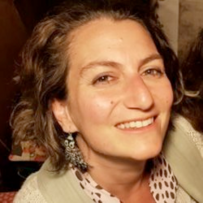
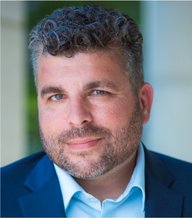
Michael Talkowski | Dr. Talkowski is the Director of the Center for Genomic Medicine (CGM) and Professor of Neurology at The CGM is a large, cross-departmental genomics hub of 80+ HMS affiliated faculty and over 400 genome scientists pursuing all facets of genomic medicine research across MGB and HMS Departments, Institutes, and Institutions. The CGM is a major docking point for institutional leadership and research programs at the Broad Dr. Talkowski leads an integrated molecular and computational genomics research program focused on the discovery and characterization of genetic variation in human disease, mechanistic modeling, and the delivery of novel translational therapeutic and diagnostic approaches in genomic medicine. His team has been recognized for transformative discoveries the study of genome structural variation and the genetic etiologies of autism, neurodevelopmental and neuropsychiatric disorders, neurodegenerative disorders, and fetal anomalies. |
S2 E8 - Wednesday, October 28, 2026 (16:00 CET)
Jointly hosted by ICHG and ESHG
Download the flyer for more information
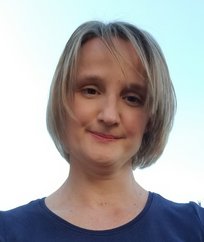
Simoni Avansini | Stem cell-based organoid models of neurodevelopmental disorders Neurodevelopmental disorders (NDDs) associated with epilepsy are complex, polygenic conditions with limited therapeutic options, mainly due to an incomplete understanding of their genetic basis and the lack of representative human models. In this presentation, I will discuss the use of human brain organoids derived from induced pluripotent stem cells of NDD patients. I will also present findings from brain organoids generated from patients with Focal Cortical Dysplasia, which recapitulate key disease hallmarks, including impaired proliferation, cellular abnormalities, and neuronal network hyperexcitability. These models provide a relevant platform to investigate disease mechanisms and enable therapeutic screening. Dr. Avansini is a researcher at the University of Campinas (Brazil), where her work focuses on epilepsy, molecular biology, malformations of cortical development, and disease modeling using stem cells. Since 2010, she has been studying focal cortical dysplasia (FCD), aiming to understand the pathophysiology of this cortical malformation and ultimately accelerate the development of new treatments. Recently, she began her career as an independent researcher, with a particular interest in neurodevelopment and, more specifically, epileptogenesis in FCD using human brain models. Her contributions to science are focused on epilepsy and malformations of cortical development using molecular biology, genetics, and stem cell biology. She has published 17 full papers in peer-reviewed journals, with 902 citations and an H-index of 14 according to Google Scholar. |
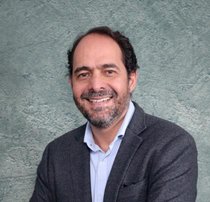
Andres Moreno-Estrada | "Population medical genomics in Latin America: The Mexican Biobank Project" Dr. Andres Moreno-Estrada is a leading researcher in population and evolutionary genomics whose work has significantly advanced the understanding of genetic diversity in Latin America. He led the first comprehensive study of the genetic structure of the Mexican population, including the genomes of 20 Indigenous groups, published in Science in 2014. His research demonstrated how regional Indigenous ancestry shapes the genetic diversity of Mexico’s cosmopolitan population and influences biomedical traits. He has since expanded similar genomic studies across the Caribbean, South America, and Polynesia, including landmark research on the Rapanui population of Easter Island published in Nature in 2020. He currently leads the MX Biobank project, creating the most comprehensive genomic catalogue of the Mexican population, featured in Nature and Nature Medicine. Dr. Moreno-Estrada has published more than 55 peer-reviewed papers with over 32,000 citations and has contributed to major international initiatives including the 1000 Genomes Project and the Human Cell Atlas. He is currently Principal Investigator of the Population and Evolutionary Genomics Laboratory at Cinvestav in Mexico City. |
S2 E9 - Wednesday, November 25, 2026 (16:00 CET)
with Bart Loeys
How to participate?
The webinar will be held on a Zoom platform. Participation is free of charge. The Zoom Link will be available on this website in due time before each webinar.
Contact
Ms. Magdalena Seidl
ESHG Society Office
c/o WMA GmbH, Alser Strasse 4, 1090 Vienna, Austria
[e]: courses(at)eshg.org